
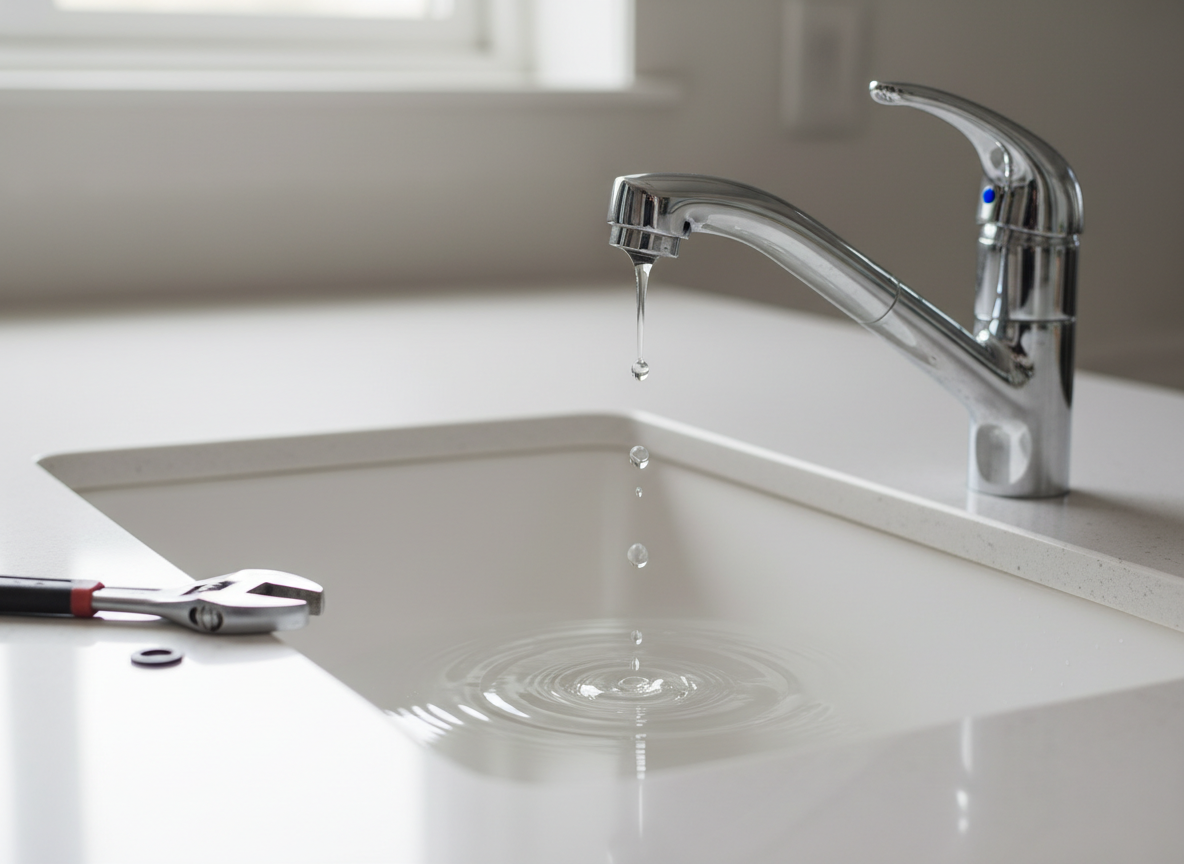
A dripping tap is one of the most common household annoyances, and one of the easiest to fix yourself. In most cases the cause is a worn washer or a faulty cartridge, both of which are cheap to replace. This guide covers the main types of tap found in UK homes.
This guide contains affiliate links. If you buy through them, we may earn a small commission at no extra cost to you. As an Amazon Associate I earn from qualifying purchases. Read our affiliate disclosure.
First, what type of tap do you have?
- Traditional (compression) taps: Usually older pillar taps or mixers where you turn the handle several times to go from off to fully on, and it gets harder to turn as it closes. These use a rubber washer that squashes against a seat to stop the water.
- Quarter-turn taps: The handle only turns a quarter or half turn from off to on. These use ceramic disc cartridges.
- Single-lever mixer taps: One lever controls both flow and temperature. These use a single ceramic cartridge.
Also work out where the drip is coming from. Water dripping from the spout usually means a worn washer or cartridge. Water leaking from around the handle or the base usually means a worn O-ring or seal.
What you’ll need
- An adjustable spanner
- Flat-head and cross-head screwdrivers
- Allen keys (for many modern mixer taps)
- Replacement washer, O-rings or cartridge (take the old one to the shop to match it)
- An old towel and a cloth
- Silicone grease suitable for taps
Step 1: Turn off the water
Look under the sink or behind the bath panel for an isolation valve on the pipe feeding the tap. It’s usually a small fitting with a slot you turn a quarter turn with a flat-head screwdriver so the slot is across the pipe. If there isn’t one, turn off the water at the main stopcock, which is often under the kitchen sink.

Then open the tap fully to drain any remaining water, and put the plug in the sink so you don’t lose small parts down the drain. Lay a towel in the sink to protect it from dropped tools.
Fixing a traditional (compression) tap

- Remove the handle. Prise off the decorative cap on top (often marked hot or cold), undo the screw underneath and lift off the handle. Some older taps have a metal shroud you unscrew instead.
- Unscrew the headgear. Use your spanner to undo the large nut (the headgear) and lift it out. Hold the tap body steady with your other hand so you don’t twist the whole tap.
- Replace the washer. The rubber washer sits at the bottom of the headgear, held by a small nut or just pushed on. Remove it and fit a new one of the same size.
- Check the O-ring. If water was leaking around the handle, replace the O-ring on the spindle too, adding a smear of tap grease.
- Reassemble. Screw the headgear back in firmly but don’t overtighten, then refit the handle and cap.
Fixing a quarter-turn or lever mixer tap
- Remove the handle. Look for a small grub screw at the back or underneath the handle, or under a cap. Loosen it with an Allen key and pull the handle off.
- Remove the cartridge. Unscrew the retaining nut or shroud and lift out the cartridge. Note which way round it goes, or take a photo before you remove it.
- Inspect and clean. Sometimes a drip is caused by limescale or grit on the ceramic discs or seals rather than a broken cartridge. Clean it gently and check the rubber seals at the bottom.
- Replace if needed. If the cartridge is cracked or still drips after cleaning, buy an exact match. Take the old cartridge with you, or note the tap’s brand and model, because cartridges vary a lot.
- Reassemble in reverse order, making sure the cartridge sits in the same position as before.
Final step: Turn the water back on and test
Make sure the tap is closed, then slowly turn the isolation valve or stopcock back on. Open the tap gently at first, as some air may spit out. Check for drips at the spout and leaks around the handle and base.
Still dripping?
- Worn valve seat: On compression taps, the brass seat the washer presses against can become pitted. A seat-reseating tool can fix this, or the tap may need replacing.
- Wrong part: A washer or cartridge that’s even slightly the wrong size won’t seal.
- Old tap: If the tap is very old or parts are hard to find, replacing the whole tap is often simpler and not much more expensive.
If the leak is coming from the pipes or fittings under the sink rather than the tap itself, or you’re not comfortable working on your plumbing, call a qualified plumber.
Related guides: How to paint a room without streaks · How to lay peel and stick vinyl flooring
Our picks for this job
For most drips, this is all you need. Always match cartridges to your tap’s brand and model.

Adjustable spanner
Undoes the headgear and most plumbing nuts.

Tap washer kit
Covers the common sizes for compression taps.

Silicone tap grease
Keeps O-rings sealing and handles turning smoothly.
Buttons go to Amazon UK. If you buy, we may earn a small commission at no extra cost to you.
Leave a Reply